Solar panel junction boxes have undergone significant evolution over the past decade. Advances in production automation, soldering technologies, raw material development, higher module current ratings (driven by larger wafer sizes like 182 mm and 210 mm), and deeper understanding of field failures have dramatically improved junction box reliability. Today’s high-quality junction boxes incorporate robust inline quality checks such as automated optical inspection (AOI), electrical continuity testing, accelerated ageing tests and thermal runaway test to ensure consistent performance over 25+ years.
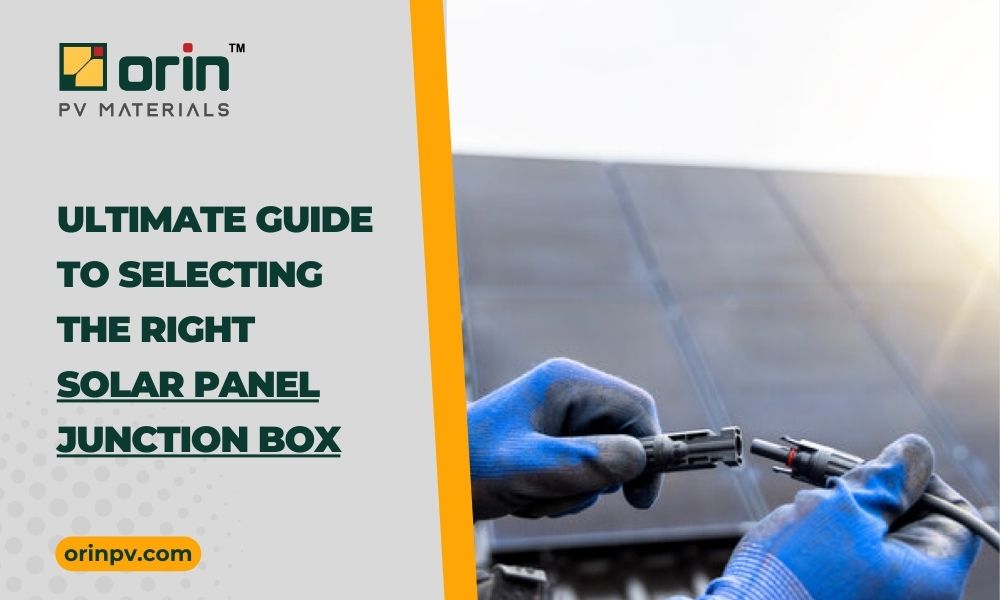
Selecting the correct Solar Panel Junction Box is critical for system safety, efficiency, and long-term durability. Below is a comprehensive technical breakdown of the key factors to consider, including formulas, international standards, and practical recommendations for PV module manufacturers, EPC contractors, and system designers.
1. System Voltage Rating
Modern PV systems predominantly operate at 1500 V DC (IEC 61730, IEC 62109). While 2000 V systems are emerging for utility-scale projects to reduce cable losses and BOS costs, 2000 V-certified junction boxes are still maturing and have limited availability. Always verify the junction box is rated for the maximum system voltage (Vmax) plus a safety margin for temperature-induced Voc rise.
2. Maximum Working Voltage of Bypass Diodes
Standard PV modules have 60 or 72 cells, with each bypass diode protecting approximately 20–24 cells (one-third or one-half of the string). The diode must withstand the reverse voltage of the protected substring when shaded.
Formula for required VRRM (Repetitive Reverse Voltage):
VRRM ≥ Voc_substring × (1 + ΔVoc_temp) where Voc_substring ≈ 24 × Voc_cell (at STC) ΔVoc_temp ≈ 0.30–0.35 (30–35% increase from 25 °C to -40 °C)
For a typical 72-cell module with Voc ≈ 45–50 V at STC, substring Voc ≈ 15–17 V at STC → VRRM ≥ 20–22 V at -40 °C. Market-standard diodes are rated 45 V or 60 V to provide ample margin.
3. Weather and Environmental Protection
Junction boxes must survive extreme conditions:
- Operating temperature range: -40 °C to +85 °C (IEC 61215)
- UV resistance, salt mist (IEC 61701), ammonia corrosion (IEC 62716), and humidity-freeze cycling
- No cracking or delamination under prolonged UV and thermal cycling
Material choice: High-performance PPE (polyphenylene ether) with RTI-125 Deg C
4. Current Rating of Bypass Diodes
The diode must safely handle the full short-circuit current of the module when shaded, with a safety factor.
For monofacial modules: I_diode ≥ 1.25 × I_sc (STC)
For bifacial modules (accounting for rear-side gain): I_diode ≥ 1.25 × I_sc × (1 + 0.30 × Bifaciality factor) Typical bifaciality 0.7–0.85 → effective current increase up to 25–30%
For high-current modules (210 mm wafers, I_sc > 18 A), select diodes rated 25–35 A. Higher current ratings generate significantly more heat (P ≈ I² × Vf), so 35 A diodes often use dual-tranche SMD packages with improved heat spreading.
In hot climates, diode forward voltage Vf increases with temperature, so prefer diodes with slightly higher current margin.
| # | Cell Size | Isc | Module Type | Bifaciality | (1+30%xBif)x1.25 | Current Rating of Module | Current Rating of Jbox | Safety Margin |
| 1 | 156.75 | 10 | Polycrystalline | 75% | 1.53125 | 15.31 | 18 | 17.55% |
| 2 | 166 | 11.6 | PERc | 75% | 1.53125 | 17.76 | 22 | 23.86% |
| 3 | 182 | 13.9 | TOPCon | 75% | 1.53125 | 21.28 | 25 | 17.46% |
| 4 | 182×210 | 16 | TOPCon | 75% | 1.53125 | 24.50 | 30 | 22.45% |
| 5 | 210 | 18.4 | TOPCon | 75% | 1.53125 | 28.18 | 30 | 6.48% |
| 6 | 230 | 22 | TOPCon | 75% | 1.53125 | 33.69 | 35 | 3.90% |
5. Cable Termination Methods
Reliable termination prevents hot spots and arcing:
- Crimping: Must achieve pull strength > 200 N and be reinforced with solder to eliminate micro-gaps.
- Resistance welding: Requires precise current and time control to avoid overheating.
- No loose connections inside the box—every contact point must be fixed to prevent heating.
6. Connectors
MC4-compatible connectors are standard. Key requirements:
- Dimensional tolerances tight enough to guarantee IP68 sealing
- High-quality silicone or EPDM sealing rings
- Contact resistance < 0.5 mΩ to minimize I²R losses and heating
7. Relative Thermal Index (RTI) of Housing
RTI indicates long-term thermal endurance.
- Best-in-class PPE materials: RTI 125 °C
- Higher RTI allows safer operation at elevated ambient temperatures and improves fire safety.
8 Thermal Management of Diodes
Schottky diodes remain the industry standard due to low forward voltage drop (Vf ≈ 0.4–0.55 V at rated current).
Comparison:
- Axial diodes: Higher junction temperature (Tj) because of poorer thermal coupling to the housing.
- SMD (surface-mount) diodes: Lower Tj (typically 15–25 °C cooler) due to larger contact area and direct heat sinking to the box body.
For 25–35 A diodes, ensure the junction box has adequate heat-spreading copper or aluminum pads and potting with high thermal conductivity.
9. Cable Specifications
Standard PV junction boxes use 4 mm² (12 AWG) tinned copper cables, which are rated for up to 50 A continuous (IEC 60228, UL 854). Cable must comply with:
- IEC 62930 or UL 4703 (PV wire)
- UV, ozone, and oil resistance
- Halogen-free and low-smoke properties
10. Soldering Compatibility with Module Production Lines
Junction boxes must be compatible with the module manufacturer’s soldering process:
- Induction soldering: Requires pre-tinned solder blocks or pads on the junction box terminals. High repeatability, ideal for automated lines.
- Laser soldering: No pre-tin block needed; direct laser melting of solder paste. Offers excellent precision and minimal thermal stress.
- Punch-hole soldering (modified method): Busbar has punched holes; solder flows through for mechanical and electrical strength.
Poor soldering repeatability leads to high-resistance joints that overheat under load and cause premature failure. Always validate solder joint pull strength and electrical resistance.
11. Ingress Protection
IP68 is the current industry benchmark for PV junction boxes:
- Complete dust protection
- Continuous immersion in water under defined conditions
Achieved through:
- Ultrasonic welding of lid to body (sealed seams)
- High-quality O-rings at cable entry and connectors
- Full potting with silicone or polyurethane sealant for complete waterproofing
12. Dimensional Accuracy and Fit
Tight tolerances are essential for both production and field reliability:
- Lid must snap securely and not loosen over time (vibration, thermal cycling)
- Connector alignment within ±0.2 mm
- Busbar contact surfaces flat and parallel to avoid stress on solder joints
Loose lids or misaligned components compromise IP rating and can lead to water ingress and catastrophic failure.
13. Compatibility with Silicone Sealants
Many modern junction boxes rely on silicone sealants for two critical applications: internal potting (encapsulating diodes and connections) and external fixing (bonding the box to the module backsheet).
- Potting silicone sealant: Typically two-component RTV (room-temperature vulcanizing) silicones with high thermal conductivity are used. The housing material (e.g., PPE, PPO, PA) must exhibit excellent adhesion to the cured silicone to prevent voids, delamination, or moisture ingress over thermal cycling (-40 °C to +85 °C). Poor compatibility can lead to sealant detachment and diode overheating.
Conclusion
Choosing the right Solar Panel Junction Box is no longer a minor technical decision—it’s a long-term investment in safety, efficiency, and reliability. As PV modules evolve with higher currents, larger wafer sizes, and longer warranty expectations, the junction box must keep pace. From system voltage ratings and bypass diode selection to thermal management, ingress protection, and material compatibility, every detail matters. A well-engineered Solar Panel Junction Box minimizes power loss, prevents hotspots, and ensures stable performance for more than 25 years in harsh outdoor environments.
Manufacturers like Orin PV understand that modern solar projects demand more than just compliance—they require proven durability, precision engineering, and future-ready designs. By focusing on advanced materials, high RTI housings, superior diode thermal control, and robust sealing systems, Orin PV delivers junction box solutions that align perfectly with today’s high-current and bifacial modules. When each component is optimized, the Solar Panel Junction Box becomes a silent protector of your entire PV system.
As the industry moves forward, emerging priorities such as high-current PV junction solutions, advanced solar module connectivity, and long-life photovoltaic components will define project success. Selecting the right partner and product today helps avoid costly failures tomorrow. If you want consistent output, reduced maintenance risks, and peace of mind over decades of operation, now is the time to act.
Contact Orin PV Now and future-proof your solar installations with confidence.