Solar panels operate outdoors throughout the year. They face rain, dust, humidity, heat, and changing temperatures, so the electrical components used inside a PV module need adequate protection. One important specification to consider is the IP rating of the junction box.
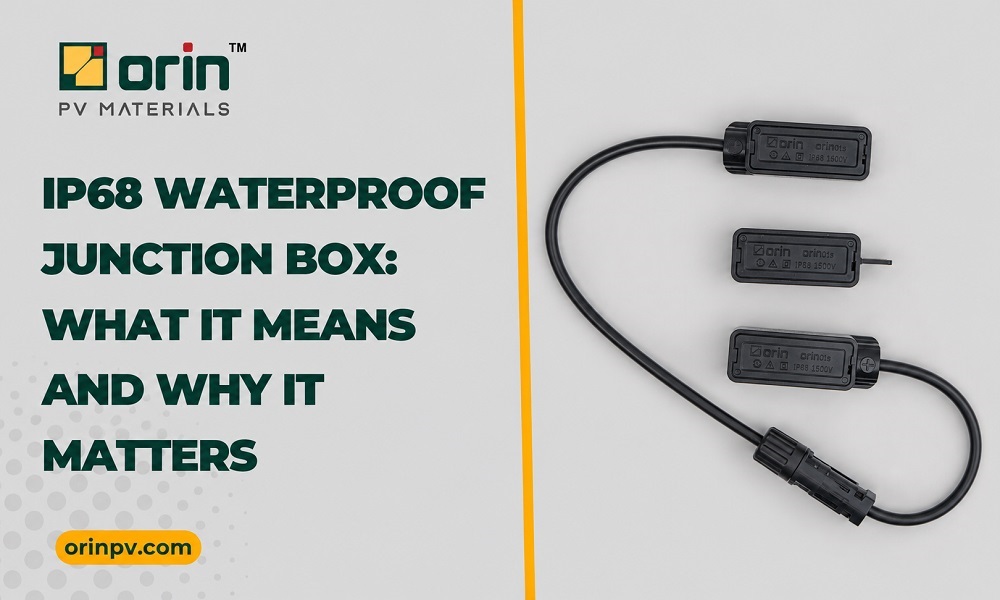
An IP68 waterproof junction box is designed to provide a high level of protection against dust and water ingress. For solar module manufacturers, this protection can be important for maintaining electrical reliability when panels are installed in demanding outdoor environments.
What Does IP68 Mean?
IP stands for Ingress Protection. The rating is defined under IEC 60529 and indicates how effectively an enclosure protects its internal components against solids and water.
The two numbers in IP68 have different meanings:
- 6: The first digit indicates complete protection against dust ingress.
- 8: The second digit indicates protection against prolonged immersion in water under conditions specified by the manufacturer.
The exact testing conditions for the second digit can vary depending on the product and manufacturer’s specifications. Therefore, an IP68 rating should not simply be treated as meaning that every product can be placed underwater indefinitely.
Why Does IP68 Matter in Solar Junction Boxes?
A solar junction box is installed on the back of a PV module and contains important electrical connections and bypass diodes. Since the component remains exposed to outdoor conditions, moisture protection is an important part of its design.
Water entering the enclosure can potentially contribute to:
- Corrosion of electrical contacts
- Insulation deterioration
- Electrical leakage
- Increased resistance at connections
- Component damage
- Reduced service life
A properly sealed ip68 waterproof junction box helps reduce the possibility of environmental exposure reaching the internal electrical components.
Where Is an IP68 Junction Box Used?
IP68-rated junction boxes can be particularly useful for photovoltaic modules installed in environments where exposure to moisture and dust is expected.
Common applications include:
- Rooftop solar installations
- Utility-scale solar farms
- Commercial and industrial PV systems
- Agricultural solar installations
- Coastal or humid environments
- Outdoor photovoltaic equipment
However, the IP rating is only one part of product selection. Electrical ratings, thermal performance, materials, diode quality and certification should also be evaluated.
What Should Manufacturers Check?
When selecting an ip68 waterproof junction box, PV manufacturers should consider several technical factors rather than focusing only on the IP rating.
Material Quality
The enclosure material should be suitable for prolonged outdoor exposure and changing temperatures. UV resistance and thermal stability can contribute to longer product life.
Sealing and Construction
The junction box needs a reliable sealing system to maintain its protection against dust and water. Poor sealing can compromise the stated protection level.
Electrical Performance
The junction box should be appropriate for the voltage, current and operating conditions of the intended PV module.
Testing and Standards
Manufacturers should verify that the product has been tested according to relevant photovoltaic and electrical standards. IEC 62790 covers safety, construction and testing requirements for junction boxes used with photovoltaic modules.
Orin’s Approach to PV Junction Boxes
Orin develops PV components with a focus on reliability and long-term outdoor performance. Its PV junction box range includes products designed with high environmental protection, thermal stability and dependable electrical connections in mind.
Orin’s PV junction boxes feature IP68 protection, helping provide resistance against dust and water ingress in demanding solar applications. The products are also developed with considerations such as high-RTI materials and reliable bypass diode performance.
For PV module manufacturers looking for dependable component solutions, Orin PV provides products designed to support the requirements of modern solar manufacturing.
Final Thoughts
An IP rating is more than a number printed on a product specification sheet. For solar junction boxes, it provides useful information about how well the enclosure can protect its internal components from environmental exposure.
An ip68 waterproof junction box can provide strong protection against dust and water ingress, but manufacturers should also consider electrical ratings, materials, testing, thermal performance and overall product construction before making a selection.
With its focus on PV component quality and environmental protection, Orin offers junction box solutions designed for the long-term demands of photovoltaic applications.
FAQs
1. What does IP68 mean for a solar junction box?
IP68 indicates complete dust protection and water protection during prolonged immersion under specified testing conditions.
2. Why is IP68 protection important for solar junction boxes?
It helps protect internal electrical connections from water, dust, corrosion, leakage, and environmental damage during outdoor operation.
3. Where are IP68 junction boxes commonly used?
They are commonly used in rooftop, utility-scale, commercial, industrial, agricultural, coastal, and other outdoor solar installations.
4. Is IP68 the only factor when choosing a junction box?
No, manufacturers should also evaluate electrical ratings, materials, thermal performance, sealing quality, testing, and relevant certifications.